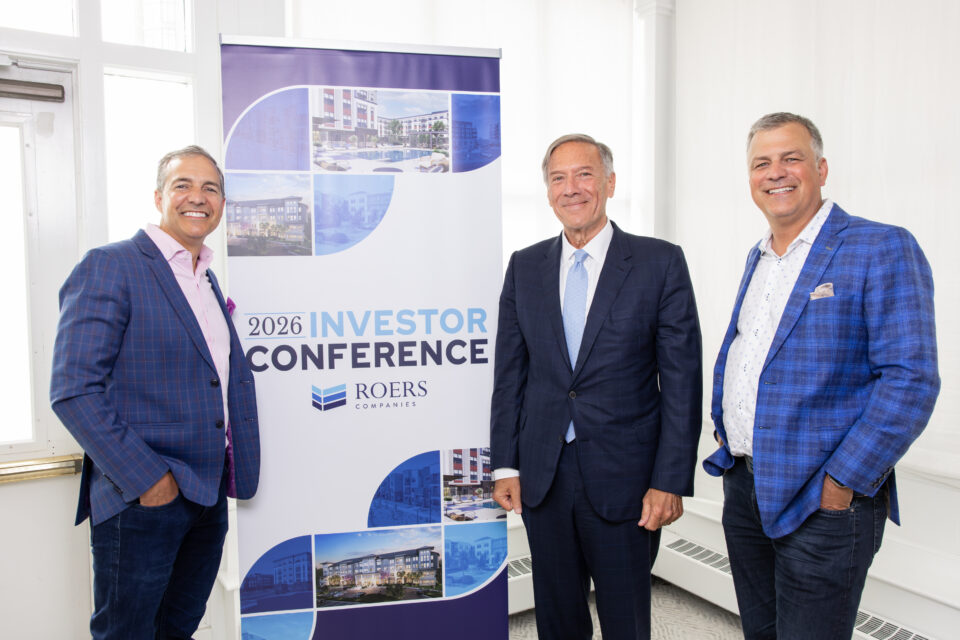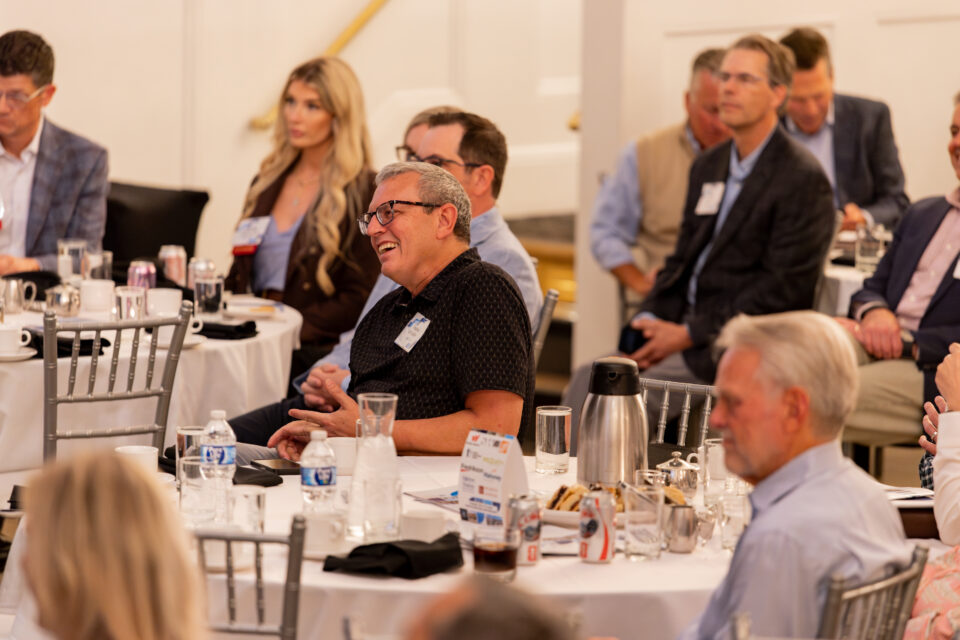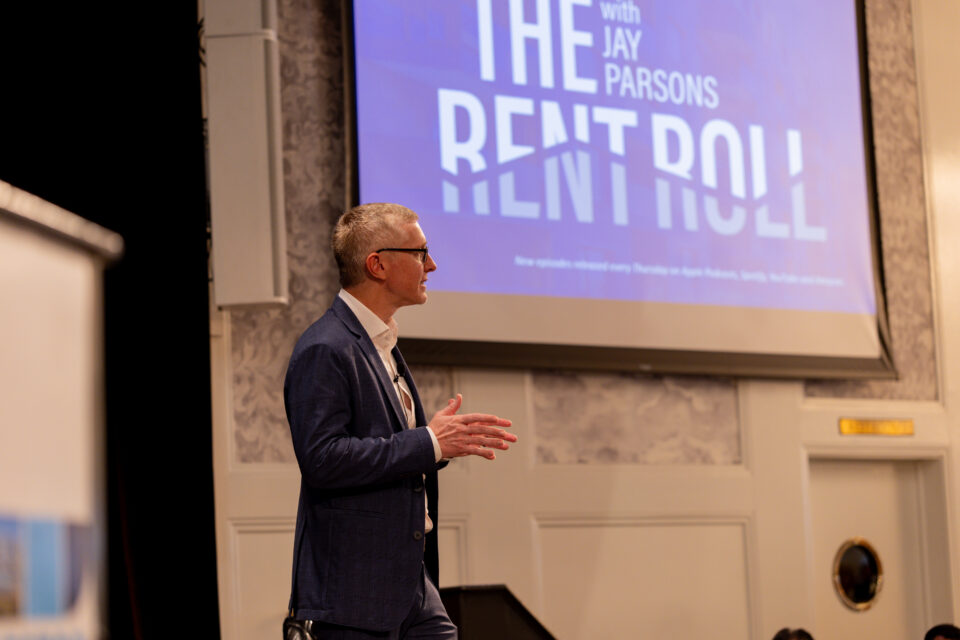
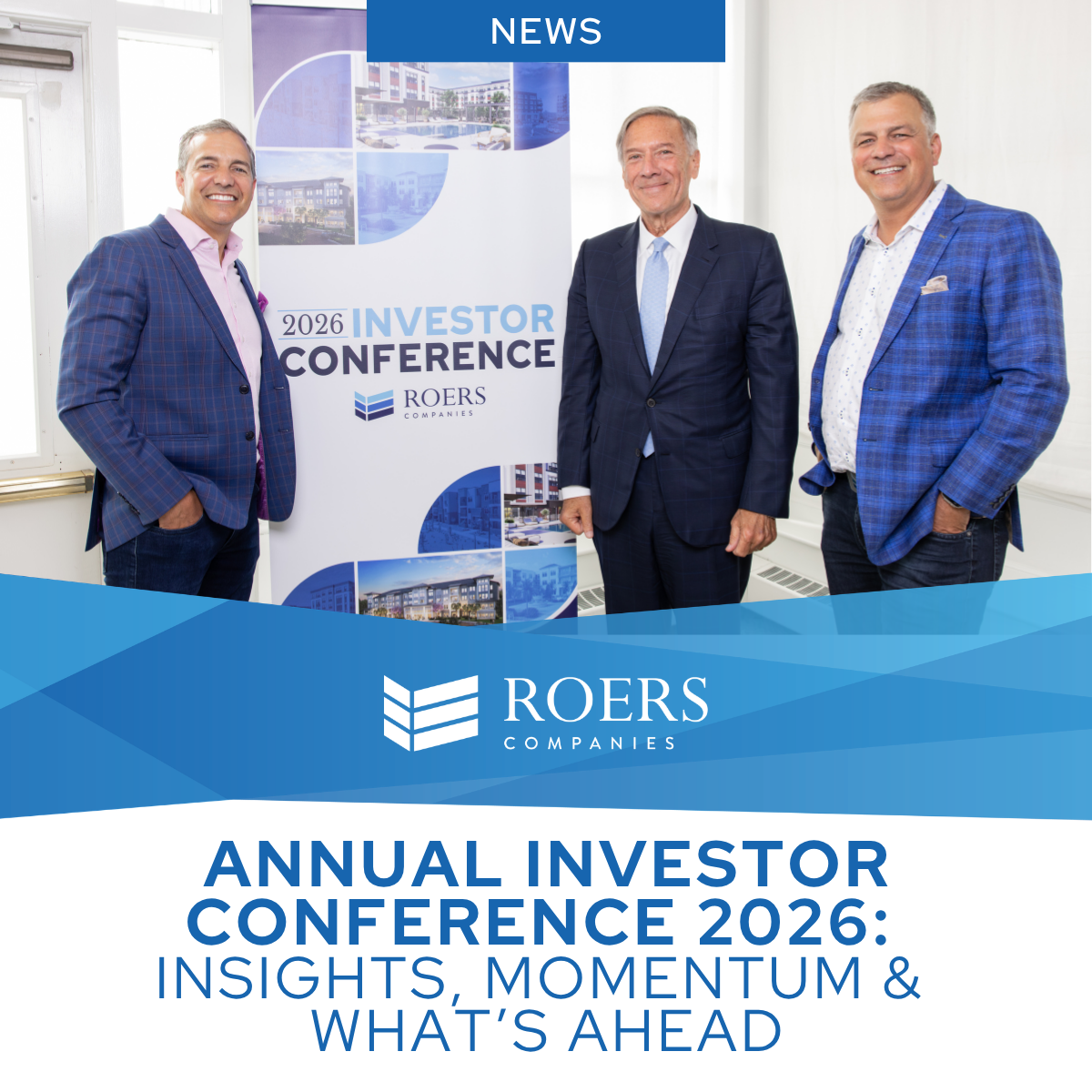
Thursday, June 4, 2026 Roers Companies gathered approximately 250 investors, partners, and leaders to the Annual Investor Conference. It was an afternoon designed to strengthen relationships, deliver valuable insights, and discuss what’s ahead for Roers Cos.
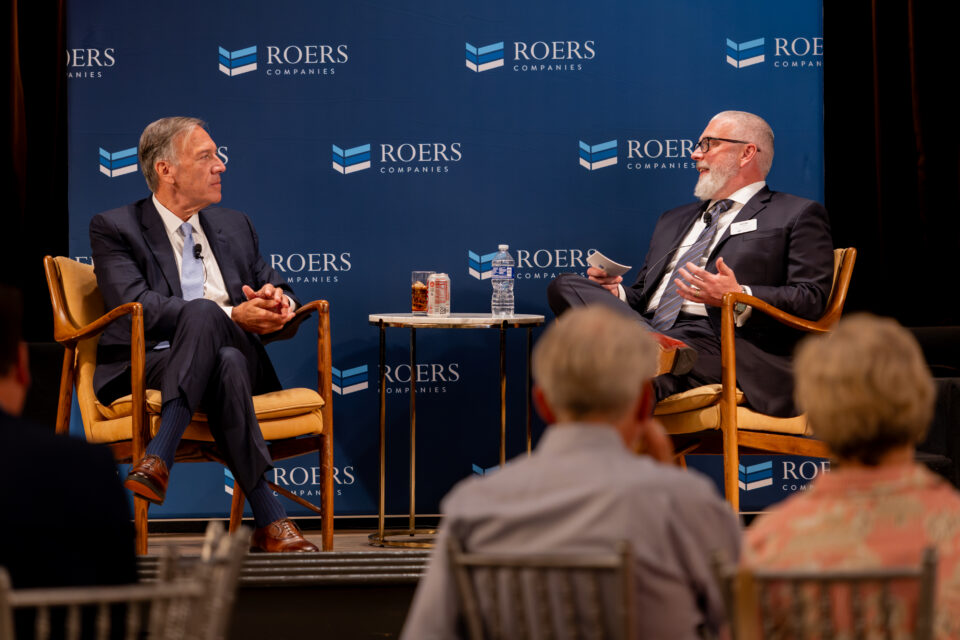
Rental housing economist, Jay Parsons took the stage to dive deeper into today’s multifamily housing market trends, while our internal panel gave investors a behind-the-scenes look at Roers Cos.’ processes, recent success, and upcoming investment opportunities. The program concluded with a moderated conversation between former Secretary of State and CIA Director, Mike Pompeo and CFO John Carr, where they discussed the broader U.S. economy, emerging technologies, and forces shaping the future.
Below are a few highlights from the conference.
Jay Parson’s came ready with the data! Below are three key takeaways from his presentation, and what they mean for Roers Cos. investors.
Supply Drives the Market
In 2024, the multifamily market experienced a once‑in‑a‑generation supply surge, with approximately 585,000 units delivered — the highest annual total since the mid‑1970s. Parsons explained what typically follows record supply levels: a period of strong absorption. As new deliveries decline, units lease more quickly, eliminating excess inventory. While rent growth may not be immediate, high absorption signals rent increases and reduced concessions are on the horizon. Parsons projects declining annual deliveries through 2030, reinforcing that the U.S. remains structurally undersupplied despite recent record completions.
For Roers Cos. investors, this trend is encouraging. Month‑over‑month rent data shows positive momentum, particularly in high‑supply regions such as the Sun Belt and Mountain markets, which absorbed much of the 2024 supply wave and now have the strongest rebound potential.
Flight to Quality
Parsons addressed the misconception that rent increases are pricing out most renters. While affordability challenges remain acute for households earning under $30,000 — and underscore the need for low income tax credit housing — this segment is not driving overall demand. Instead, demand has shifted decisively toward higher quality housing. Approximately 80–90% of apartment demand is concentrated in Class-A properties, with high income households fueling most new rental absorption. In fact, the highest rent tiers are absorbing nearly twice as many units as mid tier properties. This preference is also reflected in transaction activity, with nearly a quarter of properties sold in 2025 being five years old or newer. This leads to a fair assumption that Roers Cos. properties are positioned in favor of the demand at the two critical points: leasing and sale.
Changing Renter Trends
Homeownership costs continue to rise, and as of January 2026, owning a home costs approximately $1,700 more per month than renting. These elevated costs, combined with economic uncertainty, have extended the renting phase of life. In 2025, only 29% of 30‑year‑olds owned a home, down from 40% in 2005. Although a softer job market has temporarily increased the number of 25–34‑year‑olds living with family, this dynamic is creating pent‑up rental demand. For most households, renting remains the first step before homeownership — particularly given today’s high barriers to entry — supporting sustained renter demand now and in the future.
These conditions mean one important thing for Roers Cos. Investors: Locked in renters now and in the future.
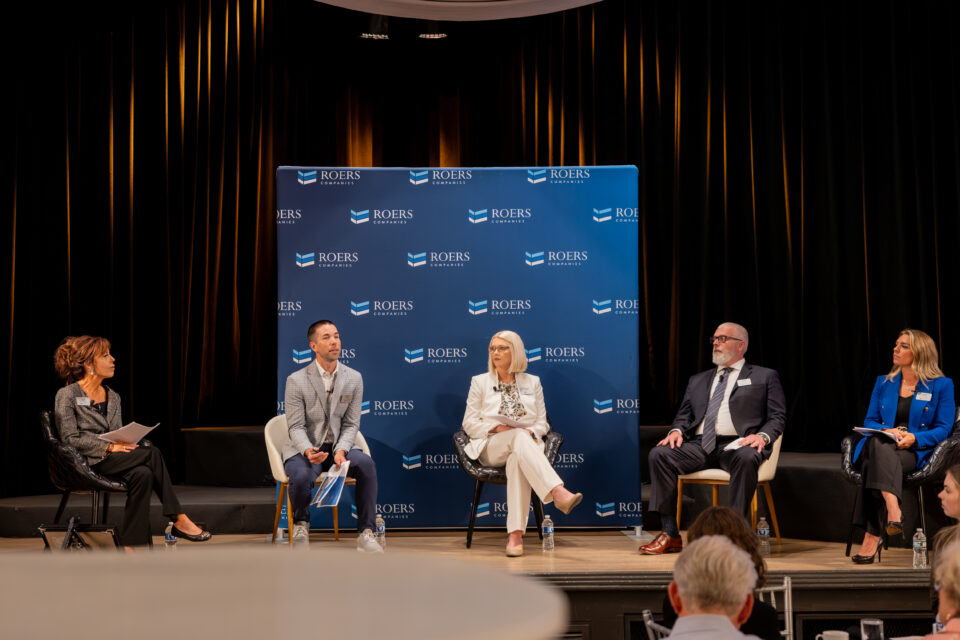
Our Internal Panel moderated by Lori Arrell (SVP Investor Relations) featured Shane LaFave (COO), Stacy Ekholm (SVP Property Management), John Carr (CFO) and Katie Scheetz (VP Investor Relations). Each leader showcased updates and insights reflective of the last 12 to 18 months for their respective departments.
How Roers Cos. Maintains Momentum
Chief Operating Officer, Shane LaFave helped investors understand how Roers Cos. has been able to scale and maintain recent growth. Roers Cos. expects to deliver approximately 2,000 additional units and complete 12 closings in 2026. Supporting this growth are three core pillars: vertical integration, internal controls, and a strong execution track record.
Vertical integration provides visibility and alignment across the full project lifecycle, enabling faster decision‑making, real‑time problem solving, and tighter cost control. Internal control methods — including the investment committee process, property‑level leasing strategies, and conservative debt structures — ensure progress without relying on aggressive assumptions. Finally, Roers Cos.’ proven track record and long‑standing relationships with lenders, cities, industry partners, and investors position the firm as a trusted partner capable of replicating success across markets, time and time again.
Operational Excellence at the Property Level
SVP of Property Management Stacy Ekholm emphasized the importance of staying closely connected to on‑site operations, what she described as “eating your own dog food.” While data is critical, firsthand insight from properties and teams ensures better decision‑making. By reducing regional manager portfolios, creating East and West operational director roles, and appointing a head of revenue, Ekholm continues to refine our operating model in response to every changing needs. This hands‑on approach, combined with investment in people and a focus on challenging assumptions, drives occupancy and long‑term value creation.
Opportunistic Selling
CFO John Carr highlighted Roers Cos.’ opportunistic approach to the market. Rather than targeting fixed exit timelines, Roers Cos. prioritizes steady cash flow, risk management, and strategic timing. Decisions are informed by debt structure, buyer demand, operating performance, and overall market confidence. This flexibility has delivered results: both 2025 sales — Axle in Fridley, MN, and Venue in Chanhassen, MN — outperformed pro forma expectations.
Why Roers, Why Now, What’s Next?
VP of Investor Relations Katie Scheetz closed the panel by reinforcing Roers Cos.’ differentiated strategy. By focusing on high‑demand, low‑supply submarkets, Roers Cos. has successfully expanded nationwide while maintaining a replicable platform. Scheetz shifted focus to the future by giving investors an exclusive look at our next opportunity: Cross-Market Collective: Shore to Summit. This bundled opportunity is designed to provide exposure to two distinct demand profiles: Bozeman’s growth-driven mountain economy and Naples’ difficult-to-enter coastal housing market. Accredited investors are invited to request access and learn more about how this may fit into a diversified portfolio.
The afternoon was rounded out with Secretary Mike Pompeo in conversation with John Carr. Together, discussed topics including the future of AI, tariffs, with Sec. Pompeo recalling stories from his days as former Secretary of State and CIA Director.
Local Engagement
Secretary Pompeo gave the room a grounding reminder among sensationalized headlines: our local governments are important. What is happening at the state and city level can have just as big of an impact on businesses as national news – often more. By staying engaged with city councils, sheriffs, school boards, other facets within our own communities we can aid in the need to prioritize the well-being of community individuals and businesses. Sec. Pompeo emphasized that as state-to-state migration increases and new areas experience population spikes, local officials must align with the communities they serve to create places where people want to live, work and do business.
Energy Revolution
Sec. Pompeo shared some insights on the future of the energy industry. He first encouraged us to strive to be more efficient in both our personal and business practices. As total energy demand continues to skyrocket the strength of relationships with energy partners around the world will continue to be wildly important. Pompeo noted that he’s seeing many startups in the nuclear energy space and that he thinks we’re getting closer to widespread use of nuclear energy. He anticipates this “cracking” of the nuclear fusion code will explode the nuclear energy space and that the demand will be enormous. In relation to housing, Secretary Pompeo sees this as big opportunity for businesses like Roers Cos. to cut material and transportation costs across the board.
Confidence in the U.S. Dollar
Secretary Pompeo’s prevailing message was a reassuring one. The American economy is very difficult to break. He is confident that U.S. economy will continue to be “the envy of the world”. Secretary Pompeo also shared his thoughts on the strength of the U.S. dollar and is confident that the Federal Reserve is correctly positioned to preserve it. With businesspeople continuing to stimulate the economy by taking risks, building out businesses and creating employment opportunities and foreign investment from allies, Pompeo sees an economy that is strong and stable. While foreign conflicts, tariffs and administrative changes have effects on our economy, those effects sometimes feel amplified when it’s all over the news we see every day. When we zoom out and look at the American economy from a global perspective, we see that it is both secure and revered.
Thank you to our investors for your continued partnership and engagement. Your trust and support are foundational to our success. We are grateful for the opportunity to connect, share insights, and discuss what lies ahead. We appreciate everyone who joined us for a successful Annual Investor Conference and look forward to building on this momentum together.